


Maintaining a healthy and attractive landscape requires attention throughout the year. Seasonal changes bring different challenges for lawns, trees, and garden beds, which is why seasonal cleanups play an important role in landscape maintenance. These services help remove debris, restore lawn health, and prepare outdoor spaces for the next stage of growth.
Understanding the differences between spring and fall yard maintenance allows homeowners to protect their landscape investment. Each season has unique priorities that support plant health, improve curb appeal, and prevent long term yard issues.
Why Seasonal Cleanups Are Important
Landscapes are constantly affected by weather conditions, plant cycles, and natural debris such as leaves, branches, and dead plant material. Without regular maintenance, these materials can accumulate and interfere with healthy lawn growth.
According to the United States Department of Agriculture, plant debris and dense organic buildup can create environments where pests and plant diseases thrive. Seasonal yard cleanup helps reduce these risks while maintaining soil health and improving overall landscape appearance.
Regular seasonal cleanups help:
- Promote healthy plant growth
- Prevent pest and disease problems
- Improve lawn density and strength
- Maintain a clean and organized outdoor living space
By addressing these tasks during the right time of year, homeowners can keep their property in better condition with fewer long term problems.
What Is a Spring Yard Cleanup?
Spring cleanup focuses on restoring the landscape after winter. Snow, ice, and cold temperatures often leave behind debris, compacted soil, and damaged plants. The goal of spring maintenance is to prepare the lawn and garden areas for active growth.
Key Tasks During Spring Cleanup
Spring yard maintenance typically includes several important services.
1. Removing Winter Debris
During winter, yards often accumulate:
- Fallen branches
- Leaves and organic debris
- Dead grass and plant material
Clearing these materials improves airflow and allows sunlight to reach the lawn and garden beds.
2. Lawn Raking and Thatch Removal
Thatch is a layer of organic material that forms between the soil and grass blades. Excessive thatch can block water and nutrients from reaching the soil.
Spring raking helps loosen this layer and encourages stronger grass growth.
3. Edging and Bed Preparation
Garden beds may need fresh edging and soil preparation after winter conditions. Spring cleanup often includes:
- Reshaping garden borders
- Removing weeds
- Preparing beds for planting
This process improves the structure and appearance of the landscape.
4. Early Weed Control
Spring is an ideal time to address weeds before they spread. Many landscaping professionals apply preventive treatments early in the growing season.
According to the Environmental Protection Agency, early weed control treatments can significantly reduce the number of weeds that appear later in the season.
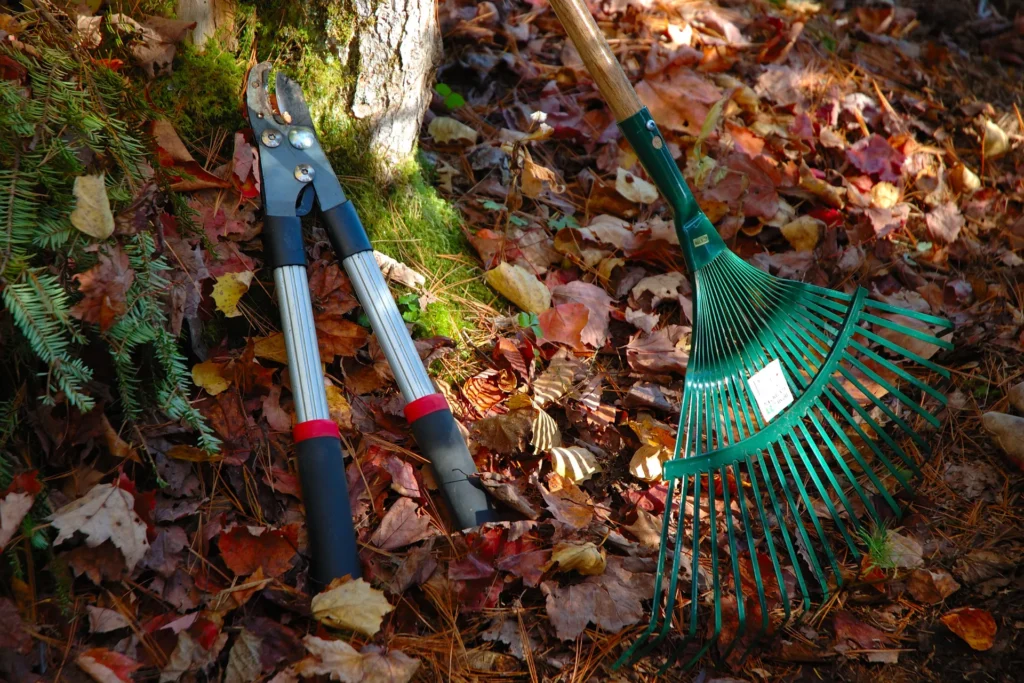
What Is a Fall Yard Cleanup?
Fall cleanup focuses on preparing the landscape for colder weather and protecting plants during winter. As temperatures drop, trees shed leaves and many plants begin entering dormancy.
Fall maintenance helps prevent winter damage and supports healthy growth the following spring.
Key Tasks During Fall Cleanup
Fall yard cleanups typically involve removing large amounts of organic debris and protecting landscape features.
1. Leaf Removal
Leaves accumulate quickly during autumn. While small amounts can benefit soil when composted, large layers of leaves may smother grass and block sunlight.
Regular leaf removal prevents:
- Lawn damage
- Mold growth
- Pest habitats
2. Pruning and Plant Trimming
Some plants benefit from light trimming before winter. Removing damaged or overgrown branches reduces the risk of breakage during snow or wind.
Proper pruning also supports healthier plant structure.
3. Garden Bed Cleanup
Fall is a good time to remove spent annual plants and clean garden beds.
This process may include:
- Removing dead flowers and stems
- Pulling weeds
- Preparing soil for the next planting season
Clean beds reduce the chances of pests overwintering in the soil.
4. Lawn Preparation for Winter
Preparing turf for winter helps ensure strong growth the following spring.
Fall lawn preparation often includes:
- Final mowing adjustments
- Aeration to relieve soil compaction
- Fertilization to strengthen roots
Healthy root systems allow grass to survive winter stress more effectively.
Spring vs Fall Cleanup: Key Differences
Although both types of seasonal cleanups focus on maintaining healthy landscapes, they serve different purposes.
Spring Cleanup Focus
Spring maintenance prepares the yard for growth and activity.
Primary goals include:
- Restoring lawns after winter damage
- Removing leftover debris
- Preparing garden beds for planting
- Preventing early weed growth
Fall Cleanup Focus
Fall maintenance prepares the landscape for dormancy and colder weather.
Primary goals include:
- Removing large amounts of leaves
- Protecting plants before winter
- Cleaning garden beds
- Strengthening turf roots for the next growing season
Both services are essential for year round landscape health.
Benefits of Professional Seasonal Cleanup Services
Many homeowners handle basic yard work themselves, but professional landscaping services can make seasonal maintenance more efficient and thorough.
Professional cleanup services may provide:
- Commercial grade equipment for debris removal
- Proper disposal of organic waste
- Knowledge of plant care and seasonal timing
- Efficient handling of large properties
Landscaping professionals also understand how seasonal conditions affect different plant types and soil conditions.
Tips for Maintaining Your Yard Between Seasonal Cleanups
Even with scheduled seasonal cleanups, routine maintenance throughout the year helps maintain a healthy landscape.
Helpful habits include:
- Regularly removing fallen branches and debris
- Mowing grass at appropriate heights
- Watering lawns according to seasonal needs
- Monitoring plants for pests or disease
These simple steps support the work completed during spring and fall cleanups.
Read also: How to Take Care of Your Lawn Year-Round Like a Pro
Keep Your Landscape Healthy with Professional Seasonal Maintenance
Seasonal yard maintenance is an essential part of keeping landscapes healthy and visually appealing throughout the year. Understanding the differences between spring and fall seasonal cleanups helps homeowners address the unique needs of each season.
Spring cleanup restores the yard after winter and prepares plants for active growth, while fall cleanup focuses on protecting landscapes from cold weather and preparing them for dormancy. By scheduling both types of seasonal maintenance, homeowners can maintain healthier lawns, cleaner outdoor spaces, and more resilient landscapes year after year. For the best results, consider working with SI Outdoor for professional seasonal cleanups that keep your property well maintained in every season.